
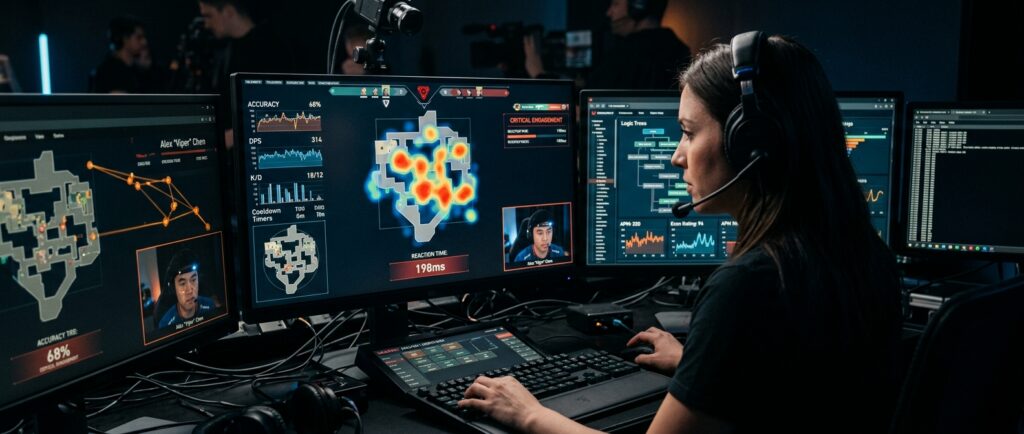
In Dota 2, ranks are not just numbers.
They signify mental endurance and decision-making under pressure.
As players ascend from Herald to Immortal, the demands intensify.
At low rank, mistakes offer reprieve.
At high rank, they are punishable in milliseconds.
Mechanics fade as critical pressure exposes cognitive strengths.
The Reaction-Time Compression
In the world of Dota 2, reaction time is a compressed resource.
Decisions are made in fractions of a second.
A delay of just 100 milliseconds can alter the outcome of engagements.
The window for successful execution shrinks.
As players face higher-tier opponents, the need for rapid response grows.
Decision Density Under Pressure
High-rank Dota 2 is defined by decision density.
Each moment carries multiple layers of tactical requirements.
Players juggle hero roles, team dynamics, and individual mechanics.
A wrong call can lead to team wipe.
Awareness of surrounding conditions becomes paramount.
Emotional control guides these decisions.
Sensory Overload Thresholds
The sensory landscape in a Dota 2 match is extreme.
Visual stimuli, sound cues, and experience intertwine to create discomfort.
A hero engages while an enemy ambush looms near.
Every signal competes for attention.
High-pressure scenarios elevate cognitive saturation.
Players must navigate without overwhelming their working memory.
Fatigue Multipliers
Fatigue is not merely physical; it is cognitive as well.
Sessions drain mental faculties.
A prolonged match can erode decision quality after just 30 minutes.
High-caliber players recognize fatigue multipliers.
A mental reset is necessary to maintain tactical clarity.
The Punishment Curve
Understanding punishment curves is vital in high-stakes matches.
Each error magnifies repercussions.
Players at Immortal rank wield immense pressure.
Miscalculations are less forgiving.
Only those with disciplined responses can sustain speed.
Why Composure Sustains Speed
Within chaos, the composed player thrives.
Calm equals weaponry in Dota 2.
To sustain strategy and momentum, players must eliminate internal lag.
Awareness combined with anticipation enhances execution.
Discipline is the keystone of tactical performance.
Tactical Takeaways
- Optimize reaction time through consistent practice sessions.
- Develop a strong mental reset routine to counteract fatigue.
- Implement emotional control protocols during high-stress engagements.
- Prioritize situational awareness to avoid cognitive overload.
- Train in varied scenarios to prepare for decision density.
Speed peaks early.
Composure sustains it.