Every competitor faces a critical juncture.
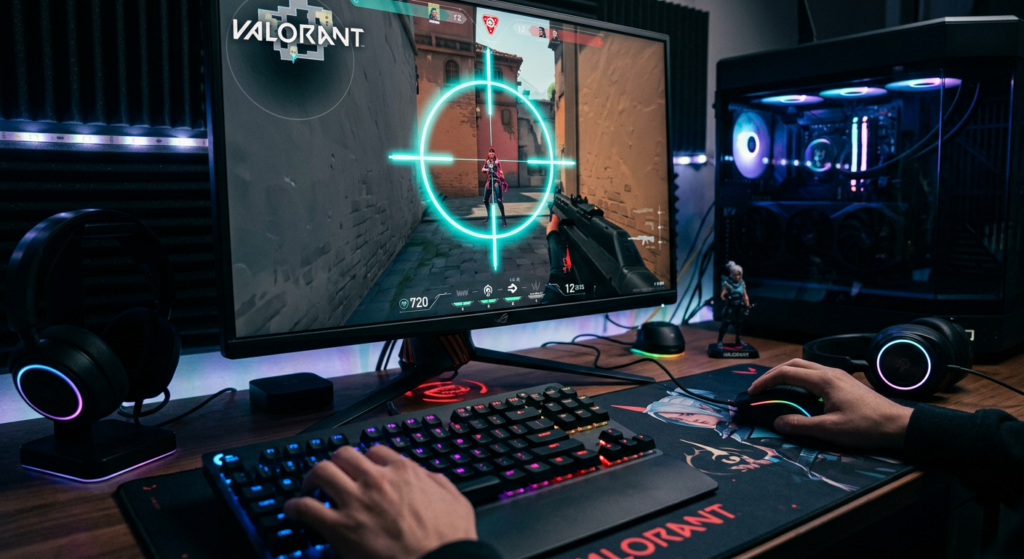
Crosshairs can dictate the difference between a clutch headshot and a missed opportunity.
Many jump into Valorant, relying on defaults.
But defaults are rarely optimal.
A disciplined competitor ensures every configuration is intentional.
Discovery: Assessing Your Current Setup
Before making any changes, evaluate your current crosshair settings.
Take note of your performance metrics.
Are your shots landing consistently?
Do you experience any disorientation during engagements?
Record these observations to identify patterns.
The Tactical Crosshair Configuration
To optimize your setup, narrow your crosshair size.
A smaller crosshair enhances visibility, minimizing distractions.
Consider the optimal values used by top players.
For instance, a common size is around 1-3 pixels.
Contrast your color against various map backgrounds.
Neon shades can provide clarity amidst chaos.
Critical Adjustments: Rigorous Specifications
Beyond size, modify the opacity and outlines of your crosshair.
The recommended opacity is between 70-100%.
Outline thickness at 1-3 pixels creates a balance between visibility and distraction.
Ensure the center dot is adequately placed.
This central focus point directly impacts your precision during engagements.
Common Pitfalls to Avoid
Many players opt for complex crosshair designs.
This often leads to unnecessary clutter.
Resist the temptation to overcomplicate; simplicity breeds accuracy.
Moreover, avoid extensive customization that deviates from proven setups.
Stick to the standards established by the elite.
Maintaining Stability Through Relentless Practice
Once your crosshair reaches an optimal state, consistency is paramount.
Practice regularly in training modes to internalize your new configuration.
Stability and muscle memory will compound your performance through repetition.
Keep your sensitivity within a disciplined threshold; 400-800 DPI is recommended for most players.
Tactical Takeaways
- Reduce your crosshair size to 1-3 pixels for clarity.
- Maintain an opacity range between 70-100% to prevent distractions.
- Utilize stable color contrasts to enhance visibility during firefights.
- Stick to simple designs to minimize cognitive load.
- Regularly practice to reinforce muscle memory and accuracy.
Crosshair alignment is not merely a preference.
It is a tactical decision that can define your success.
Master your configuration, and your precision will reflect it.